

Firebird Optics Produces Polarising Beam Splitters in Support of Deep Space Radar Project
/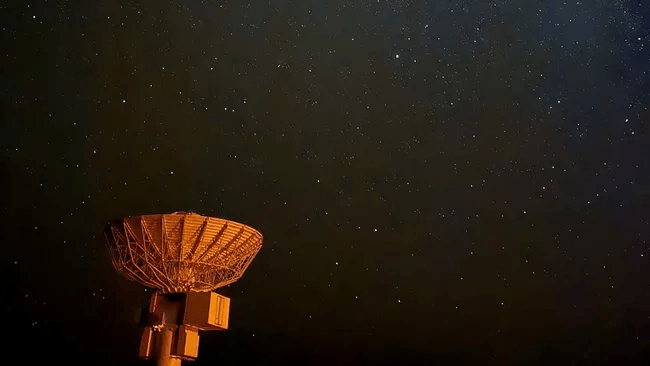
A transmit antenna at U.S. Space Force's Deep-Space Advanced Radar Capability (DARC) Site 1 in Australia. (Image credit: Doug Humphries, BAE Systems)
Tracking an object more than 22,000 miles above Earth is no small task.
The Deep Space Advanced Radar Capability (DARC) is being developed to give the United States and its allies a better view of objects operating in geosynchronous orbit. When complete, the network of advanced ground-based radar sites is expected to provide persistent, all-weather coverage of this important region of space.
Behind a system this large are thousands of individual technologies and components that must work together.
Firebird Optics recently completed production of custom Polarising Beam Splitters for CACI in support of the Deep Space Radar project, Contract No. FA8814-21-9-0001.
With Northrop Grumman serving as the prime contractor for the Deep Space Radar project, Firebird's work represents one piece of a much larger effort to build a new generation of space domain awareness capabilities.
What Is the Deep Space Radar Project?
The Deep Space Radar project, also known as the Deep Space Advanced Radar Capability (DARC), is designed to detect, track, identify and characterize objects in geosynchronous orbit, or GEO, an orbital region roughly 22,000 miles above Earth.
GEO is particularly valuable because an object at this altitude takes about 24 hours to orbit Earth. From the ground, a geosynchronous satellite can therefore appear to remain over roughly the same area.
That makes this part of space extremely useful for satellites supporting communications, national security and other important services. It also makes knowing what is happening in GEO increasingly important.
The Deep Space Radar project is being developed to improve that awareness.
Unlike traditional ground-based optical sensors, radar does not need a clear, dark sky to operate. The project is designed to operate 24 hours a day and in all weather conditions, including through clouds and during daylight.
That capability gives the United States and its allies another way to maintain awareness of activity in deep space.
Northrop Grumman's Role as Prime Contractor
Northrop Grumman is the prime contractor for the Deep Space Radar project, leading the development of the radar capability.
The U.S. Space Force selected Northrop Grumman in 2022 to develop the first of three planned radar sites through an approximately $341 million award.
Since then, the project has moved well beyond its early development stages.
The Deep Space Radar project is being built around three strategically positioned sites in the United States, Australia and United Kingdom. Together, the sites are intended to provide coverage across the geosynchronous orbital belt.
The first site is located in Western Australia. Construction of its facilities was completed in December 2024, three months ahead of schedule, followed by mission system integration and testing.
Northrop Grumman was also awarded the contract for the second site, which is proposed for a U.K. Ministry of Defence location in Pembrokeshire, Wales.
A third site is planned for the continental United States.
The complete three-site system is currently expected to be completed by 2032.
Why Does the Deep Space Radar Project Need Three Sites?
When you are trying to monitor space from Earth, geography matters.
A radar located in one country can only observe part of the sky. Putting sites in three different parts of the world gives the Deep Space Radar project a much wider view.
The United States, United Kingdom and Australia formally established their partnership through a trilateral agreement signed in 2023.
Together, the three locations are intended to provide 360-degree coverage of the GEO belt.
This global approach is especially important because of the distance involved.
Geosynchronous orbit is approximately 22,000 miles above the equator. Detecting and characterizing objects at that distance presents a significant radar challenge.
Instead of relying on one enormous receiver, the system uses multiple smaller arrays that combine signals so they can function together as a much larger array.
The underlying concept was demonstrated by the U.S. Space Force at White Sands Missile Range in 2021.
Where Does Firebird Optics Fit Into the Deep Space Radar Project?
Large defense programs depend on extensive networks of manufacturers, engineering companies and specialized suppliers.
For this project, CACI is Firebird Optics' customer, and Firebird recently manufactured custom Polarising Beam Splitters for CACI in support of the Deep Space Radar project.
The components were manufactured to detailed customer-controlled drawings covering their optical substrates, geometry, surface characteristics, coatings, polarization performance, handling and packaging.
Although the specific performance requirements are not discussed here, the components themselves are an important example of precision optical manufacturing.
Going DARC
What Are Polarising Beam Splitters?
Light has properties beyond brightness and color, including polarization, which describes the orientation of its electromagnetic oscillations.
Polarising Beam Splitters separate light according to its polarization. One polarization state can be transmitted along one optical path while another is reflected along a separate path.
Specialized thin-film coatings help produce this response. Their performance depends on factors such as wavelength, polarization and angle of incidence.
The substrate, surface quality, geometry and coating must all work together. Small imperfections or angular variations can affect the direction and quality of the transmitted and reflected beams.
For this reason, custom Polarising Beam Splitters are often manufactured for a specific optical system rather than selected as interchangeable catalog components.
Custom Polarising Beam Splitters Versus Off-the-Shelf Optics
Off-the-shelf optics can be suitable for many applications, but specialized systems may require specific substrate materials, dimensions, wavelength ranges, polarization responses, surface qualities or coatings.
Custom Polarising Beam Splitters allow the optic to be designed around those requirements. The substrate, geometry and coatings can be selected and manufactured to support the intended application.
This approach is especially valuable in aerospace, defense, scientific and other precision optical systems where standard components may create performance compromises.
If you’ve got a beam we’ll split it!
Small Optics, Large Systems
The Deep Space Radar project demonstrates the scale of modern defense technology.
At one end is a global network of radar sites spanning three countries. At the other are individual components such as custom Polarising Beam Splitters.
Northrop Grumman leads the project as prime contractor, while companies such as CACI and specialized suppliers support the broader effort.
Firebird Optics is proud to contribute through the production of custom Polarising Beam Splitters for CACI in support of the Deep Space Radar project.
Custom Polarising Beam Splitters from Firebird Optics
Firebird Optics provides custom optical components and optical coatings for defense, aerospace, scientific and industrial applications.
Our capabilities include custom Polarising Beam Splitters, beam splitters, optical windows, lenses and specialty coated optics manufactured around customer-defined requirements.
Whether the application requires polarization control, reflection, transmission, precise surface quality or a wavelength-specific coating, our goal is to manufacture the optic around the system.
Need custom Polarising Beam Splitters for your optical system? Contact Firebird Optics to discuss your requirements and request a quote.
Here’s to your success!
Firebird Optics