
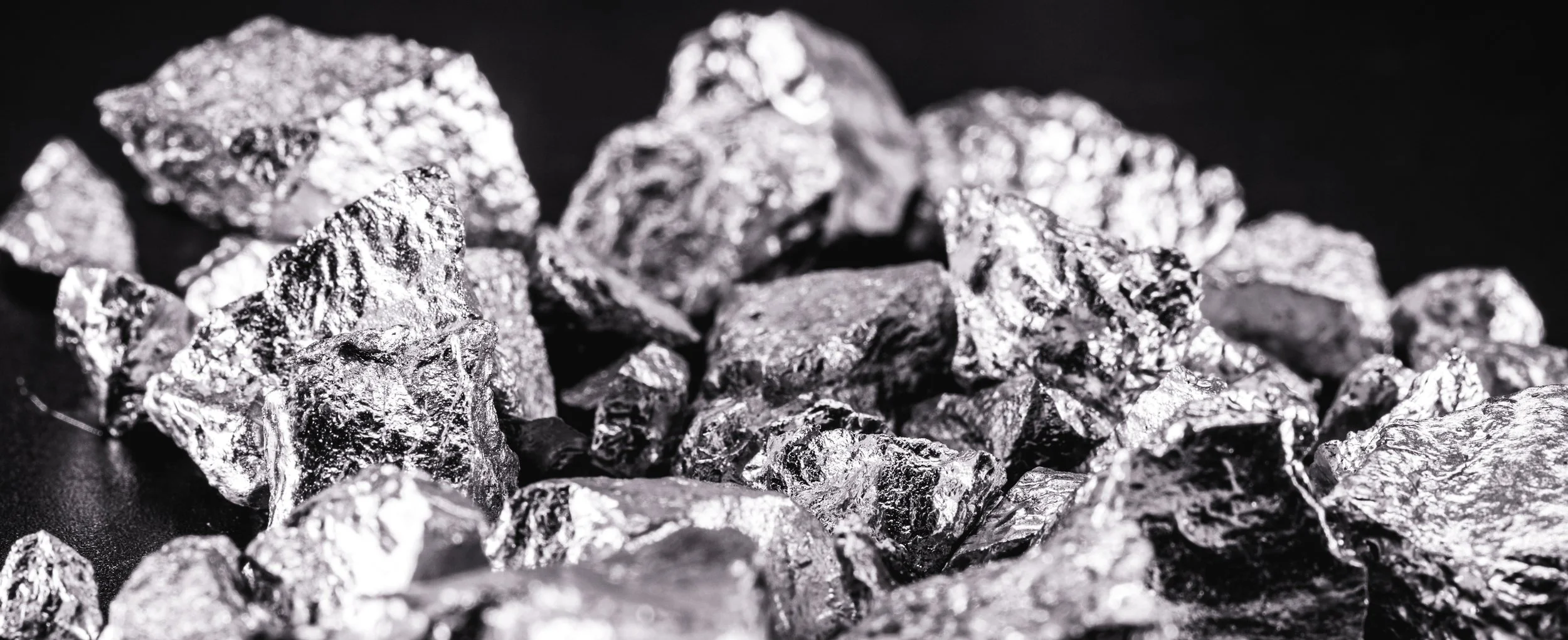
Strategic and Rare Earth Metals
Firebird Optics supplies a growing portfolio of high-purity strategic metals that support the aerospace, defense, semiconductor, infrared optics, and advanced manufacturing industries. Our inventory includes Germanium, Gallium, Indium, Tungsten, Molybdenum, Hafnium, Antimony, and Tellurium, available in a variety of forms including ingots, rods, bars, blanks, and custom-machined components. Whether you require raw material for crystal growth, semiconductor production, optical manufacturing, or research and development, our team can source standard and custom sizes with competitive lead times.
Hafnium Crystal Bars
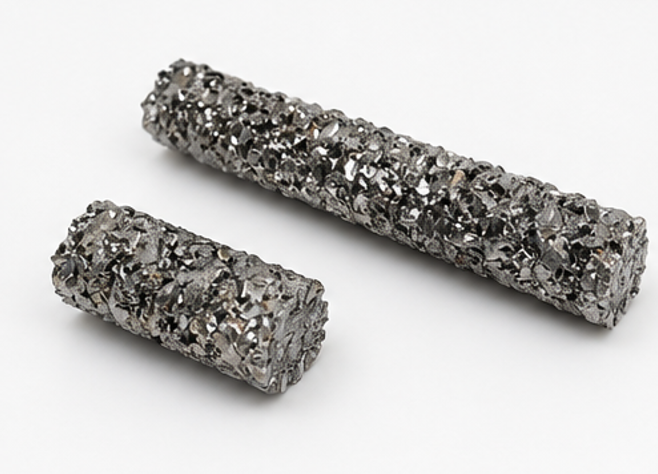
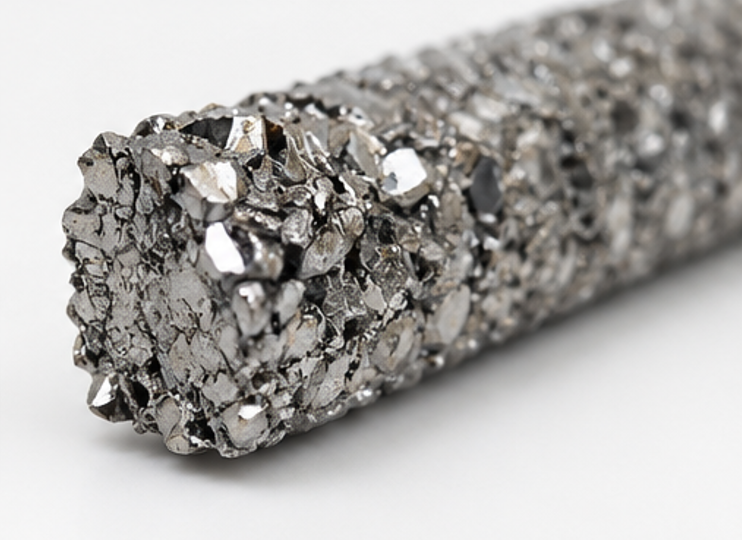
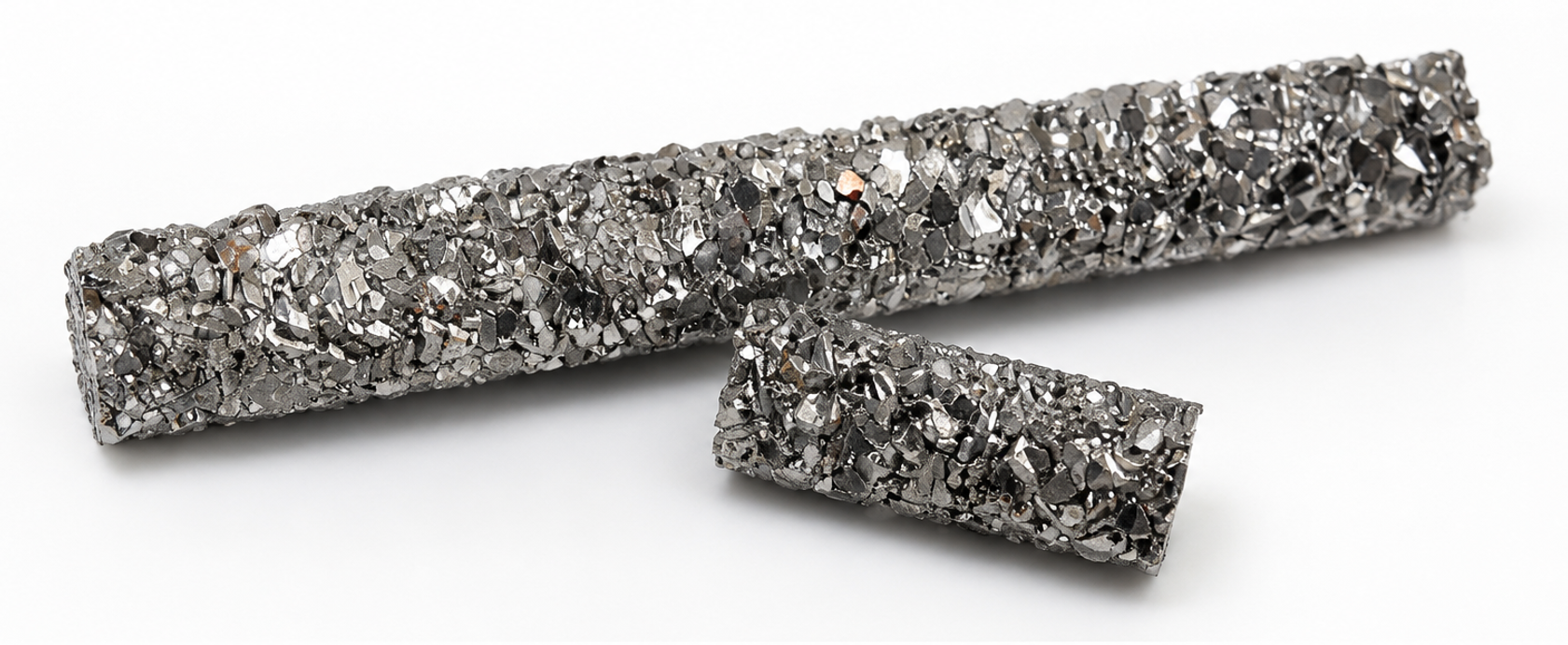
Hafnium Crystal Bars
Firebird Optics supplies high-purity Hafnium (Hf) crystal bars for demanding aerospace, nuclear, electronics, research, and advanced materials applications.
Hafnium is a refractory metal known for its high melting point, excellent corrosion resistance, mechanical stability, and strong neutron-absorption characteristics, making it particularly valuable in extreme-temperature and specialized environments. Our Hafnium crystal bars can be supplied in a range of weights and custom dimensions, with low-zirconium material options available for applications requiring tighter compositional control.
As part of our growing strategic metals offering, we can support both small research quantities and larger production requirements, including custom sourcing for specialized purity, size, and material specifications.
Hafnium Crystal Bars: Properties, Applications and Supply Chain Challenges
Hafnium may not be one of the better-known elements on the periodic table, but its combination of high-temperature performance, corrosion resistance and neutron absorption makes it a valuable material in some demanding applications.
Hafnium crystal bars are a high-purity form of metallic hafnium used as a starting material for hafnium alloys and other advanced products. They can be found in applications ranging from nuclear reactor components and aerospace alloys to semiconductor processing, optical coatings and plasma cutting equipment.
What makes hafnium particularly interesting, and sourcing it particularly challenging, is its close relationship with zirconium. The two elements occur together naturally and have very similar chemical properties. Producing high-purity hafnium therefore requires specialized separation and refining processes, which can make availability, zirconium content and supply-chain reliability important considerations when purchasing hafnium crystal bars.
What Is a Hafnium Crystal Bar?
Hafnium, chemical symbol Hf and atomic number 72, is a silvery-gray transition metal. In crystal bar form, hafnium is refined into a high-purity metallic material that can be used directly or processed into alloys, coatings and other hafnium products.
One method used to produce high-purity hafnium crystal material is the iodide refining process. Suppliers also reference electron-beam melting as part of the production of high-purity hafnium material.
The result is a dense, corrosion-resistant refractory metal with an exceptionally high melting point. These characteristics make hafnium particularly useful when ordinary metals cannot provide the required thermal, chemical or nuclear performance.
Hafnium is also closely associated with zirconium. It occurs naturally alongside zirconium, and the production of hafnium-free zirconium provides an important source of hafnium. Because the two metals have similar chemical behavior, separating them to achieve the required purity can be a significant part of the production process.
Hafnium Crystal Bar Specifications
Exact hafnium crystal bar specifications vary by supplier and application. High-purity commercial material is commonly specified according to the combined hafnium and zirconium content, with the allowable zirconium concentration controlled separately.
Typical specifications include:
Dimensions can vary considerably. Commercial suppliers list diameters ranging from approximately 20 mm to 48 mm, with full crystal bars reaching lengths of approximately one meter. Chopped pieces in the range of roughly 20 mm to 51 mm are also available.
For demanding applications, buyers should pay particular attention to the actual chemical analysis rather than relying on a general "high purity" designation. Zirconium concentration, trace metals and gaseous impurities can all be relevant depending on the intended application.
Analytical methods such as Glow Discharge Mass Spectrometry (GDMS) can be used to identify trace metallic impurities at very low concentrations. Evolved Gas Analysis (EGA) may also be used to evaluate impurities such as oxygen, hydrogen and nitrogen.
Why Zirconium Content Matters
Hafnium and zirconium are chemically similar, and this relationship plays a major role in how hafnium crystal bars are specified and produced.
A material described as Hf + Zr ≥99.99%, for example, does not necessarily contain 99.99% hafnium alone. The allowable zirconium concentration must also be considered. Commercial grades may specify maximum zirconium concentrations of 0.2%, 0.3%, 0.5%, 1.0% or other values.
This makes the zirconium specification an important purchasing parameter.
Applications requiring particularly high-purity hafnium may need significantly lower zirconium concentrations than applications where some residual zirconium is acceptable. Buyers should therefore specify both overall purity requirements and maximum Zr content when requesting material.
Key Properties of Hafnium Crystal Bars
Hafnium brings together several properties that are difficult to find in a single metal.
High melting point: With a melting point above 2,200°C, hafnium can be considered for components, alloying and processes involving extreme temperatures.
Corrosion resistance: Hafnium has chemical similarities to zirconium and develops a protective surface oxide that contributes to its corrosion resistance.
High density: At approximately 13.31 g/cm³, hafnium is considerably denser than many common engineering metals.
Strong neutron absorption: Hafnium's ability to absorb neutrons is one of its most important characteristics for nuclear applications.
Compatibility with advanced alloys: High-purity crystal bars can serve as raw material for hafnium-based and high-temperature alloy systems.
Together, these properties give hafnium a specialized role in nuclear technology, aerospace, electronics and other high-performance industries.
Hafnium Crystal Bar Applications
The value of a hafnium crystal bar is ultimately in what can be made from it. High-purity crystal material provides a starting point for several demanding technologies.
Nuclear Reactor Control Components
One of hafnium's best-known properties is its ability to capture neutrons. This characteristic allows hafnium to be used in nuclear reactor control applications.
Control materials regulate the neutron population inside a reactor, making neutron absorption an essential property. High-purity hafnium is therefore valuable in nuclear environments where material performance and composition must be tightly controlled.
Aerospace and High-Temperature Alloys
Hafnium is used in the production of superalloys and other high-temperature materials. Its refractory characteristics make it attractive for environments involving intense heat and demanding mechanical conditions.
Hafnium-containing materials can be associated with components such as high-temperature aerospace parts, nozzles and other structures where thermal performance is a priority.
High-purity crystal bars provide raw material from which these specialized alloys can be produced.
Semiconductor Applications
Hafnium materials have become important to the electronics industry. Hafnium crystal bars can serve as feedstock for high-purity materials used in semiconductor-related processes and coating applications.
The strict purity requirements found in semiconductor manufacturing also help explain why trace-element analysis and carefully controlled zirconium levels can be important when specifying hafnium.
Optical and Thin-Film Coatings
Hafnium is also used in coating technologies, including optical coating and CVD-related applications.
High-purity starting material is particularly important in deposition processes because contaminants in the source material can potentially affect the composition and performance of the resulting film.
Plasma Cutting
Hafnium is used in plasma cutting applications, where materials must withstand highly concentrated thermal conditions.
Its high melting point and refractory characteristics make hafnium useful in components exposed to the severe temperatures associated with plasma systems.
X-Ray Equipment
Hafnium can also be used as cathode material in X-ray tube applications. Again, its high-temperature capabilities make it useful in environments where thermal performance is critical.
Research and Specialty Material Production
Hafnium crystal bars can be used as raw material for producing additional high-purity hafnium products and hafnium-based alloys.
They are also available for research, materials development and specialty applications where controlled chemistry is more important than high-volume commodity pricing.
Hafnium Crystal Bar Supply Chain Challenges
Buying hafnium is different from sourcing an ordinary industrial metal. Its production route, relationship with zirconium, purity requirements and potential use in sensitive technologies can all complicate the supply chain.
Hafnium and Zirconium Are Difficult to Separate
One of the fundamental challenges begins before a crystal bar is produced.
Hafnium occurs alongside zirconium in nature, and the two elements possess very similar chemical properties. Hafnium production is therefore closely connected to zirconium refining, particularly processes designed to produce low-hafnium or hafnium-free zirconium.
Separating the two elements requires specialized processing. The additional refining required for low-zirconium hafnium helps make purity an important factor in both availability and purchasing.
A buyer that requires Zr below 0.2%, for example, is sourcing a materially different specification than a buyer that can accept Zr below 1%.
High Purity Narrows the Available Supply
There is an important difference between obtaining hafnium and obtaining hafnium with a tightly controlled impurity profile.
Applications in nuclear technology, aerospace, semiconductors and advanced coatings may require detailed chemical certification. Buyers may need documentation covering not only Hf + Zr purity, but also zirconium concentration, trace metallic impurities and gases such as oxygen, nitrogen and hydrogen.
As requirements become tighter, the number of suitable production sources can decrease.
For critical applications, purchasers should consider requesting a certificate of analysis and determining whether additional testing such as GDMS or EGA is required before placing an order.
Export Controls Can Affect Availability and Lead Times
Hafnium's use in nuclear, aerospace and other advanced technologies introduces another potential complication: international trade compliance.
Some suppliers specifically reference dual-use export procedures when shipping hafnium crystal bars internationally. Depending on the country of origin, destination, material specification and end use, additional export documentation or licensing requirements may apply.
That means quoted production time is not always the same thing as total procurement lead time. Export approvals, documentation, transportation and customs processing can become part of the purchasing schedule.
Organizations sourcing hafnium for time-sensitive projects should account for these requirements early in the procurement process.
Custom Specifications Can Extend Procurement Times
Hafnium crystal bars are not necessarily an off-the-shelf commodity available in every combination of purity, diameter and length.
Suppliers commonly offer customized dimensions, zirconium concentrations and bar weights. While customization gives engineers more flexibility, it can also require additional production, testing and documentation.
Before requesting a quote, it helps to define:
Required Hf + Zr purity
Maximum allowable zirconium content
Diameter and length
Quantity or total weight
Maximum concentrations for critical impurities
Required analytical testing
Certificate of analysis requirements
Packaging requirements
Destination country and end-use documentation
Providing these specifications at the beginning of the procurement process can reduce unnecessary back-and-forth and help suppliers determine availability more accurately.
What to Consider When Buying Hafnium Crystal Bars
Hafnium crystal bar purchasing should begin with the application rather than simply selecting the highest purity available.
For many projects, zirconium content will be one of the most important specifications. A nuclear, semiconductor or high-purity coating application may have very different impurity requirements than general alloy development.
Dimensional requirements matter as well. Suppliers offer full-length crystal bars, custom diameters and chopped sections, so specifying the required final form can help avoid unnecessary downstream processing.
Finally, buyers should consider documentation and logistics alongside the material itself. Chemical analysis, trace impurity testing, export compliance and international shipping can all influence whether a particular hafnium source is suitable.
Hafnium Crystal Bars for Advanced Material Applications
Hafnium crystal bars occupy a specialized corner of the refractory metals market. Their high melting point, corrosion resistance, neutron absorption and suitability for advanced alloy and coating processes make them valuable across nuclear energy, aerospace, electronics, plasma cutting and materials research.
At the same time, sourcing hafnium requires more attention than purchasing many conventional metals. Its close association with zirconium makes purification challenging, high-purity specifications narrow the available supplier base, and international export requirements can add complexity to delivery.
For buyers, the best approach is to establish the required purity, zirconium concentration, dimensions, testing and documentation before beginning procurement.
Firebird Optics works with customers sourcing specialized materials for demanding technical applications. If you're looking for hafnium crystal bars or have a specific purity, dimension or quantity requirement, contact Firebird Optics to discuss availability and request a quote.