
Gas Cells for FTIR Sampling
Short pathlength cells are useful for measuring higher concentration gas samples. Firebird Optics gas cells can be used on samples with concentrations of 100ppm and above. These cells are airtight and made for extreme pressure applications in excess of 1 x 10⁻⁸ Torr.
Long Lightpath FTIR Gas Cells (Lightpaths: 2.4-30m)
Long Lightpath FTIR Gas Cells (Lightpaths: 2.4-30m)
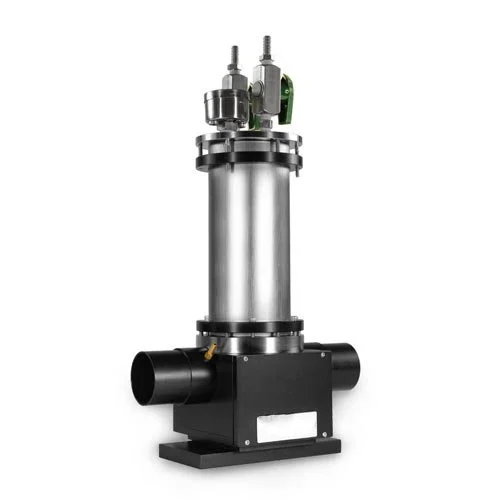
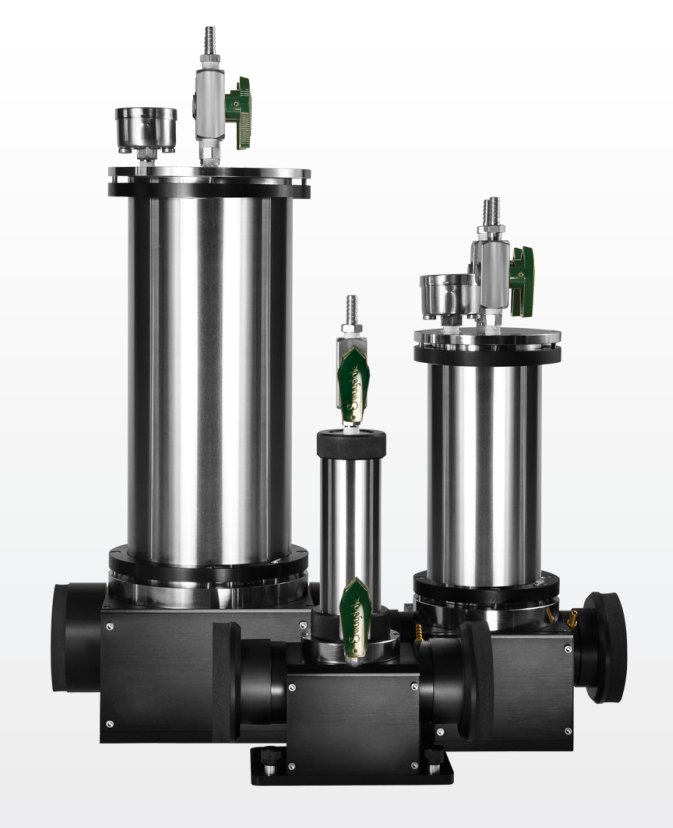
Firebird Optics' Long Lightpath FTIR Gas Cells are engineered for high-sensitivity gas analysis, providing fixed optical pathlengths from 2.4 to 30 meters for the detection of trace gases at ppm and ppb concentrations. Their compact folded optical design, gold-coated mirrors, and fully purgeable optics deliver exceptional infrared performance while minimizing atmospheric interference. The 2.4m window uses one 37.5 × 4mm window and the 5m and greater lightpath cells require two 25 × 4mm windows.
Available in metal, stainless steel, or glass configurations, these gas cells support vacuum or pressure operation and are compatible with most FTIR spectrometers. Heated models up to 200 °C and variable-path versions offer added flexibility for environmental monitoring, industrial process control, gas purity analysis, and advanced spectroscopy applications.
This cell can be used in high pressure and temperature applications where glass/quartz spectroscopy samples are impractical. If you are interested in Optical Glass and UV Quartz versions of this cell, check out the Type 34 from our friends at FireflySci. They rock.
This assembly can be fitted with Firebird Optics high grade optical windows and snapped into any commercial FTIR spectrophotometer.
There is currently a leadtime of 2-3 weeks.
Long-Path Gas Cells for FTIR, High-Sensitivity Gas Analysis for Trace Gas Detection
When measuring gases at extremely low concentrations, every centimeter of optical path matters. Long-Path Gas Cells are designed to dramatically increase the interaction between infrared light and a gas sample, allowing Fourier Transform Infrared (FTIR) spectrometers to detect compounds present at parts-per-million (ppm) and even parts-per-billion (ppb) concentrations. Whether you're performing environmental monitoring, industrial emissions testing, gas purity verification, or laboratory research, Long-Path Gas Cells provide the sensitivity needed to accurately identify and quantify trace gases.
At Firebird Optics, we supply high-performance Long-Path Gas Cells engineered for exceptional optical efficiency, rugged durability, and compatibility with most commercial FTIR spectrometers. Available in fixed pathlengths from 2.4 meters to 30 meters, as well as adjustable variable-path models, these gas cells deliver reliable performance for demanding analytical applications.
What Are Long-Path Gas Cells?
A Long-Path Gas Cell is an infrared sampling accessory used with an FTIR spectrometer to increase the effective optical pathlength through a gas sample. According to the Beer-Lambert Law, the absorbance of a gas is directly proportional to the distance light travels through it. Increasing the optical pathlength improves the instrument's ability to detect very low concentrations of gaseous compounds that would otherwise produce signals too weak for accurate measurement.
Instead of requiring a physically long chamber, Long-Path Gas Cells use a precision folded optical design. Infrared light enters through an IR-transparent window and reflects multiple times between highly reflective mirrors before reaching the detector. This optical arrangement creates an effective pathlength of several meters while maintaining a compact laboratory footprint.
Why Optical Pathlength Matters
Many gases produce relatively weak infrared absorption bands. When concentrations are extremely low, a conventional gas cell may not provide enough interaction between the infrared beam and the sample to generate a measurable signal.
Long-Path Gas Cells solve this challenge by extending the distance that infrared light travels through the sample. The result is:
Improved detection sensitivity
Higher signal-to-noise ratio
Lower detection limits
Better quantitative analysis
Greater confidence in trace gas measurements
For laboratories working with atmospheric contaminants, volatile organic compounds (VOCs), greenhouse gases, or ultra-high purity gases, increasing optical pathlength can significantly improve analytical performance.
Fixed vs. Variable Long-Path Gas Cells
Long-Path Gas Cells are available in both fixed and variable optical path configurations.
Fixed Pathlength Gas Cells
Fixed pathlength models are permanently aligned at a specific optical distance, offering exceptional stability and repeatability. Standard pathlengths include:
2.4 m
5 m
10 m
20 m
30 m
Fixed pathlength systems are ideal for routine analytical testing where the required sensitivity is well established.
Variable Pathlength Gas Cells
Variable-path models allow users to adjust the optical pathlength using a precision micrometer-controlled mirror assembly. An integrated laser assists with pathlength verification by counting beam reflections, enabling users to optimize sensitivity for different gas concentrations without changing hardware.
Variable systems provide outstanding flexibility for research laboratories and facilities analyzing multiple gas types over a wide concentration range.
Superior Optical Design
The performance of any Long-Path Gas Cell depends heavily on the quality of its optical system.
Premium Long-Path Gas Cells utilize precision diamond-turned mirrors coated with high-reflectivity gold. Gold provides exceptional infrared reflectivity while remaining chemically inert in demanding laboratory environments.
Unlike adhesive-mounted optics found in some designs, mechanically mounted mirrors eliminate potential contamination caused by epoxy outgassing. This improves long-term stability and helps maintain measurement accuracy during sensitive analytical work.
The folded optical geometry maximizes pathlength while keeping the accessory compact enough to fit directly inside the FTIR sample compartment.
Rugged Construction for Laboratory and Industrial Use
Long-Path Gas Cells are engineered for years of reliable operation in demanding analytical environments.
Available construction materials include:
Nickel-plated aluminum
Stainless steel
Heavy-wall borosilicate glass
Depending on the application, gas cells may operate under vacuum or positive pressure, providing flexibility for a broad range of analytical techniques.
Stainless steel Swagelok® valves offer dependable sealing and easy gas handling, while optional compression fittings allow integration into custom gas delivery systems.
Fully Purgeable Optics
Water vapor and atmospheric carbon dioxide can interfere with infrared measurements by introducing unwanted absorption bands into collected spectra.
Many Long-Path Gas Cells incorporate fully purgeable optical transfer sections that minimize atmospheric interference. Purging the optical path helps improve baseline stability, increase measurement repeatability, and enhance overall spectral quality, particularly during high-sensitivity trace gas analysis.
Heated Long-Path Gas Cells
Certain gas samples require elevated temperatures to prevent condensation or improve analytical accuracy.
Heated Long-Path Gas Cells are available with temperature control up to 200°C, making them well suited for:
Moisture-sensitive samples
Industrial exhaust gases
Process stream monitoring
High boiling point compounds
Elevated temperature reaction studies
Temperature sensors positioned inside the gas cell provide more accurate thermal control than externally mounted sensors. Digital controllers allow precise regulation while optional software enables automated temperature programming and data collection.
Optical Window Material Options
Different FTIR applications require different infrared window materials.
Long-Path Gas Cells can be configured with a variety of interchangeable window materials, including:
KBr
CaF₂
BaF₂
KCl
NaCl
KRS-5
ZnSe
Anti-reflection coated ZnSe
Selecting the appropriate window material allows the gas cell to be optimized for specific wavelength ranges, environmental conditions, and chemical compatibility.
Applications of Long-Path Gas Cells
Long-Path Gas Cells are widely used across research, industrial, and environmental laboratories.
Common applications include:
Environmental Monitoring
Measure atmospheric pollutants, greenhouse gases, and trace contaminants with high sensitivity.
Industrial Process Control
Monitor manufacturing processes in real time to improve product quality and process efficiency.
Gas Purity Verification
Detect trace impurities in specialty gases used throughout semiconductor, pharmaceutical, aerospace, and scientific industries.
Emissions Testing
Analyze combustion exhaust and industrial emissions for regulatory compliance and environmental reporting.
Laboratory Research
Support spectroscopy studies involving reaction kinetics, catalyst development, atmospheric chemistry, and analytical method development.
Benefits of Long-Path Gas Cells
Long-Path Gas Cells offer numerous advantages over conventional gas sampling accessories, including:
Detection of gases at ppm and ppb concentrations
Increased FTIR sensitivity
Compact folded optical design
Exceptional signal-to-noise performance
Fixed and variable pathlength options
Heated models up to 200°C
Fully purgeable optics
Gold-coated precision mirrors
Vacuum and pressure compatibility
Multiple optical window materials
Compatibility with most FTIR spectrometers
Chemical Compatibility
Please check the following chart for chemical compatibility: https://marketing.industrialspec.com/acton/attachment/30397/f-003a/1/-/-/-/-/316l-stainless-steel-chemical-compatibility-from-ism.pdf
If you need enhanced chemical compatibility check out our PTFE gas cell, which offers the following resistance- https://componentsupplycompany.com/ptfe-chemical-resistance-data.php