
Gas Cells for FTIR Sampling
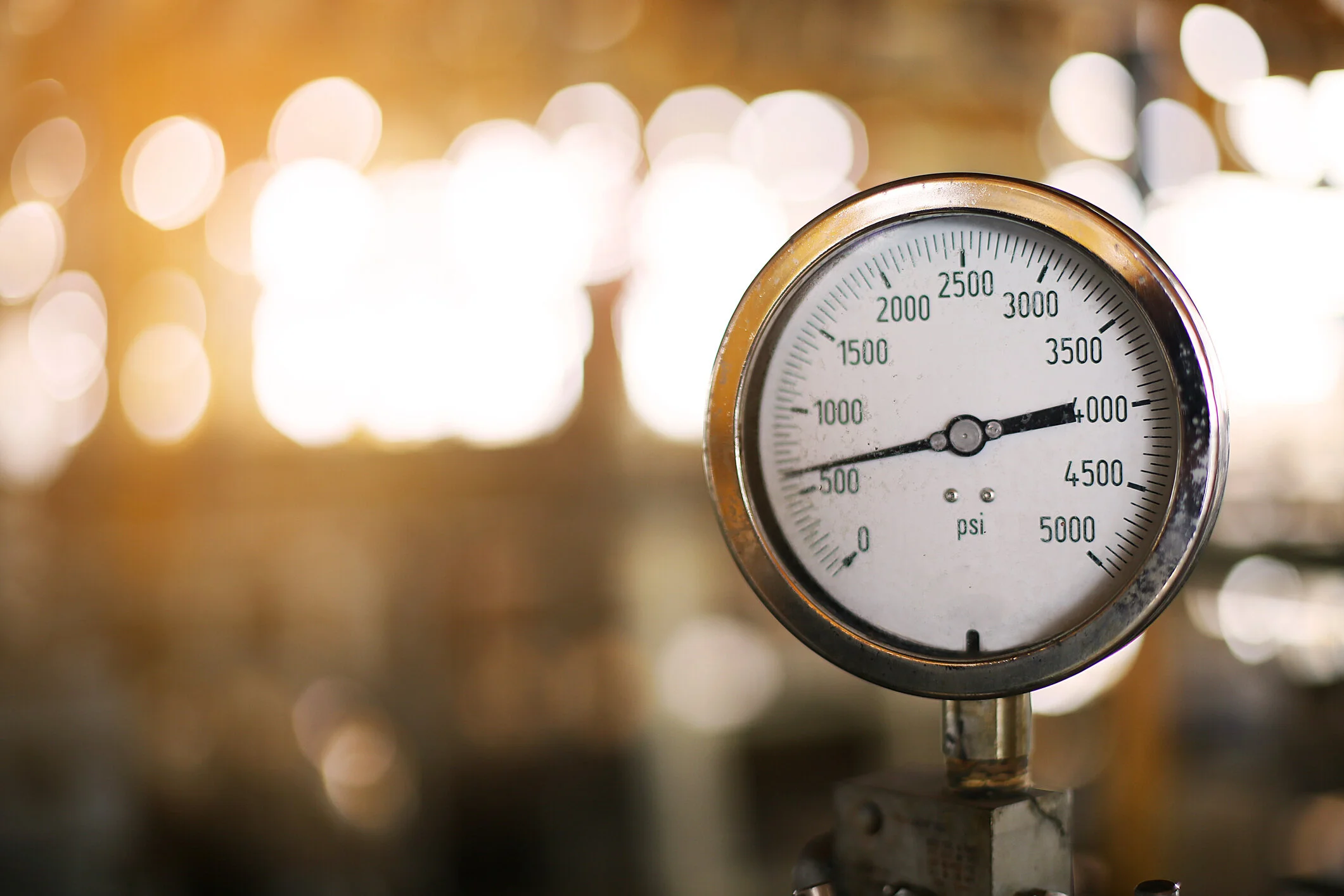
Short pathlength cells are useful for measuring higher concentration gas samples. Firebird Optics gas cells can be used on samples with concentrations of 100ppm and above. These cells are airtight and made for extreme pressure applications in excess of 1 x 10⁻⁸ Torr.
High Temperature Stainless Steel FTIR Gas Cell (Lightpaths: 10-100mm)
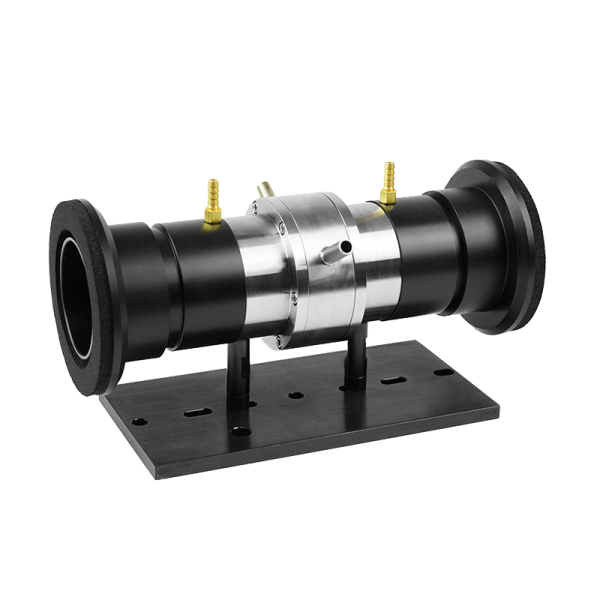
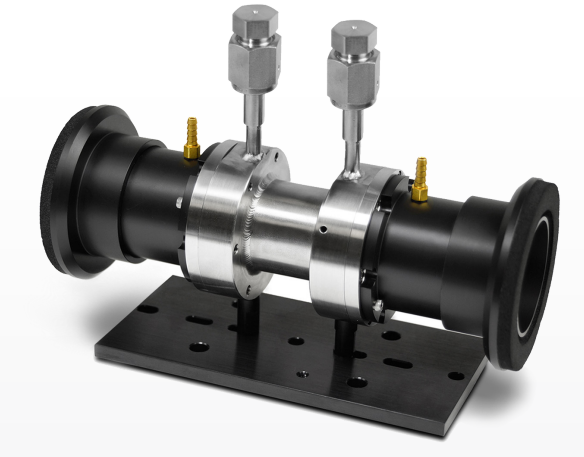
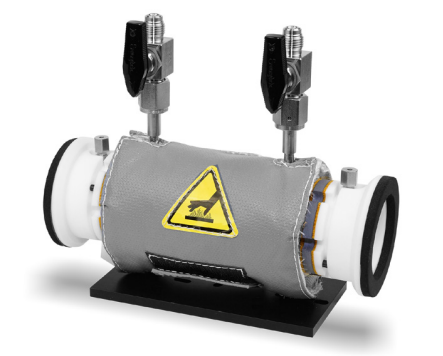
High Temperature Stainless Steel FTIR Gas Cell (Lightpaths: 10-100mm)
Firebird Optics’ High Temperature Short Pathlength FTIR Gas Cells are designed for transmission analysis of highly concentrated gases and vapor-phase samples where precise temperature control and short optical pathlengths are required. Constructed from durable stainless steel, these cells are available in pathlengths from 1 cm to 20 cm, with heated configurations capable of operating at temperatures up to 300°C to help prevent condensation and maintain vapor-phase sample stability during FTIR measurements.
The cells feature a stable baseplate-mounted design, welded VCR fittings, purge collars, and a selection of IR window materials and valve configurations to accommodate different spectral ranges, pressures, temperatures, and sample chemistries. Their robust, configurable design makes them well suited for high-temperature gas analysis, concentrated vapor analysis, evolved gas analysis, and TGA-FTIR applications.
There is currently a leadtime of 2-3 weeks.
High Temperature Short Pathlength FTIR Gas Cells
Firebird Optics supplies High Temperature Short Pathlength FTIR Gas Cells for the infrared transmission analysis of highly concentrated gases, vapors, and other vapor-phase samples. Manufactured with a durable stainless steel body, these gas cells combine short optical pathlengths with elevated-temperature operation, making them well suited for applications where conventional long-path gas cells may produce excessive absorption or where the sample must remain heated to prevent condensation.
Standard optical pathlengths range from 1 cm to 20 cm, allowing the cell configuration to be matched to the concentration and absorption characteristics of the sample. Heated configurations are available for operation at temperatures up to 300°C, providing a versatile platform for laboratory, industrial, and research FTIR gas analysis.
Why Use a Short Pathlength FTIR Gas Cell?
In FTIR gas spectroscopy, optical pathlength has a direct influence on measured absorbance. While long-path gas cells are useful for detecting gases at very low concentrations, highly concentrated gases and strongly absorbing vapor species can produce excessive absorption over longer optical paths.
A short-path gas cell reduces the distance that the infrared beam travels through the sample. This helps keep absorption within a useful measurement range and can improve the quality of spectra obtained from concentrated vapor-phase samples. Available pathlengths include 1 cm, 2 cm, 5 cm, 10 cm, 15 cm, and 20 cm, providing flexibility for a wide variety of analytical requirements.
High Temperature FTIR Gas Analysis up to 300°C
Many vapor-phase compounds must be maintained at elevated temperatures throughout an FTIR measurement. If the gas cell or associated sample path is too cold, components may condense onto internal surfaces or optical windows, potentially altering the sample concentration and compromising the resulting spectrum.
Heated Short Pathlength FTIR Gas Cells address this problem by providing controlled heating from ambient temperature up to 300°C. The heated system incorporates an RTD temperature sensor and digital temperature controller for accurate temperature regulation. Heated models also include high-temperature O-rings designed for operation at temperatures up to 300°C.
This capability makes high-temperature gas cells particularly useful for analyzing volatile compounds, process gases, heated reaction products, and evolved gases where maintaining the vapor phase is critical to accurate FTIR characterization.
Stainless Steel Gas Cell Construction
The stainless steel body provides a robust platform for demanding analytical environments. In addition to offering excellent mechanical durability, the metal construction allows the gas cell to be used under pressure when paired with an appropriate infrared window material and sealing configuration.
Gas cells are baseplate-mounted to provide mechanical stability inside the FTIR spectrometer sample compartment. Welded VCR fittings are incorporated into the standard design, with additional valve and fitting configurations available for integration into different gas handling systems. The cells are also designed for straightforward cleaning and maintenance.
Interchangeable IR Window Materials
Selecting the appropriate window material is an important consideration when configuring an FTIR gas cell. The window must provide sufficient transmission across the desired infrared wavelength range while remaining compatible with the sample chemistry, operating temperature, and pressure conditions.
Available infrared window materials include Barium Fluoride (BaF₂), Calcium Fluoride (CaF₂), Potassium Bromide (KBr), KRS-5, Sodium Chloride (NaCl), and Zinc Selenide (ZnSe). Anti-reflection coated ZnSe windows are also available for applications requiring improved optical transmission.
Window dimensions depend upon the selected optical pathlength. The 1 cm and 2 cm cells utilize 25 mm diameter x 4 mm thick windows, while the 5 cm, 10 cm, 15 cm, and 20 cm cells utilize 38 mm diameter x 6 mm thick windows. Window selection should always account for the intended operating temperature. For example, ZnSe windows are not recommended for operation above 250°C.
Reducing Atmospheric Interference in FTIR Measurements
Atmospheric water vapor and carbon dioxide can introduce unwanted absorption features into an FTIR spectrum. This can be particularly problematic when these absorption bands overlap spectral features associated with the sample being analyzed.
The Short Pathlength FTIR Gas Cell incorporates purge collars that allow the optical path surrounding the cell to be purged, helping reduce spectral interference from atmospheric H₂O and CO₂.
Combined with the stable baseplate-mounted construction, this design provides a controlled optical configuration for repeatable gas-phase FTIR measurements.
Applications for High Temperature Short Pathlength Gas Cells
High Temperature Short Pathlength FTIR Gas Cells can be used across a broad range of research, industrial, and analytical applications. Typical applications include concentrated gas and vapor analysis, evolved gas analysis, chemical reaction monitoring, process gas characterization, combustion research, materials research, environmental testing, and high-temperature spectroscopy.
The heated configuration can be particularly useful when analyzing compounds that would otherwise condense before or during measurement. Short optical pathlengths also make these cells an effective complement to long-path gas cells, allowing an FTIR laboratory to analyze samples across a much wider range of concentrations.
Custom FTIR Gas Cell Configurations
Gas cell requirements can vary significantly depending on sample chemistry, concentration, operating temperature, pressure, and available space within the FTIR spectrometer. In addition to standard configurations, custom pathlengths and cell materials are available for specialized applications.
Firebird Optics can assist customers with selecting an appropriate combination of optical pathlength, IR window material, temperature capability, seals, valves, and fittings for their specific FTIR application. Configurations can be tailored for compatibility with a variety of commercial FTIR spectrometers and gas handling systems.
High Temperature FTIR Gas Cells from Firebird Optics
Firebird Optics supplies High Temperature Short Pathlength FTIR Gas Cells for demanding gas and vapor-phase spectroscopy applications. With stainless steel construction, optical pathlengths from 1 cm to 20 cm, multiple interchangeable IR window materials, configurable gas fittings, and heated operation up to 300°C, these cells provide a flexible solution for both routine and specialized FTIR gas analysis.
Contact Firebird Optics with your required pathlength, operating temperature, gas or vapor composition, pressure requirements, preferred IR window material, and FTIR spectrometer model. Our team can help determine an appropriate configuration for your application.